
Memorial Day in South Florida: Why Hurricane Season Should Be On Your Roof's Calendar (Not Just the Grill)
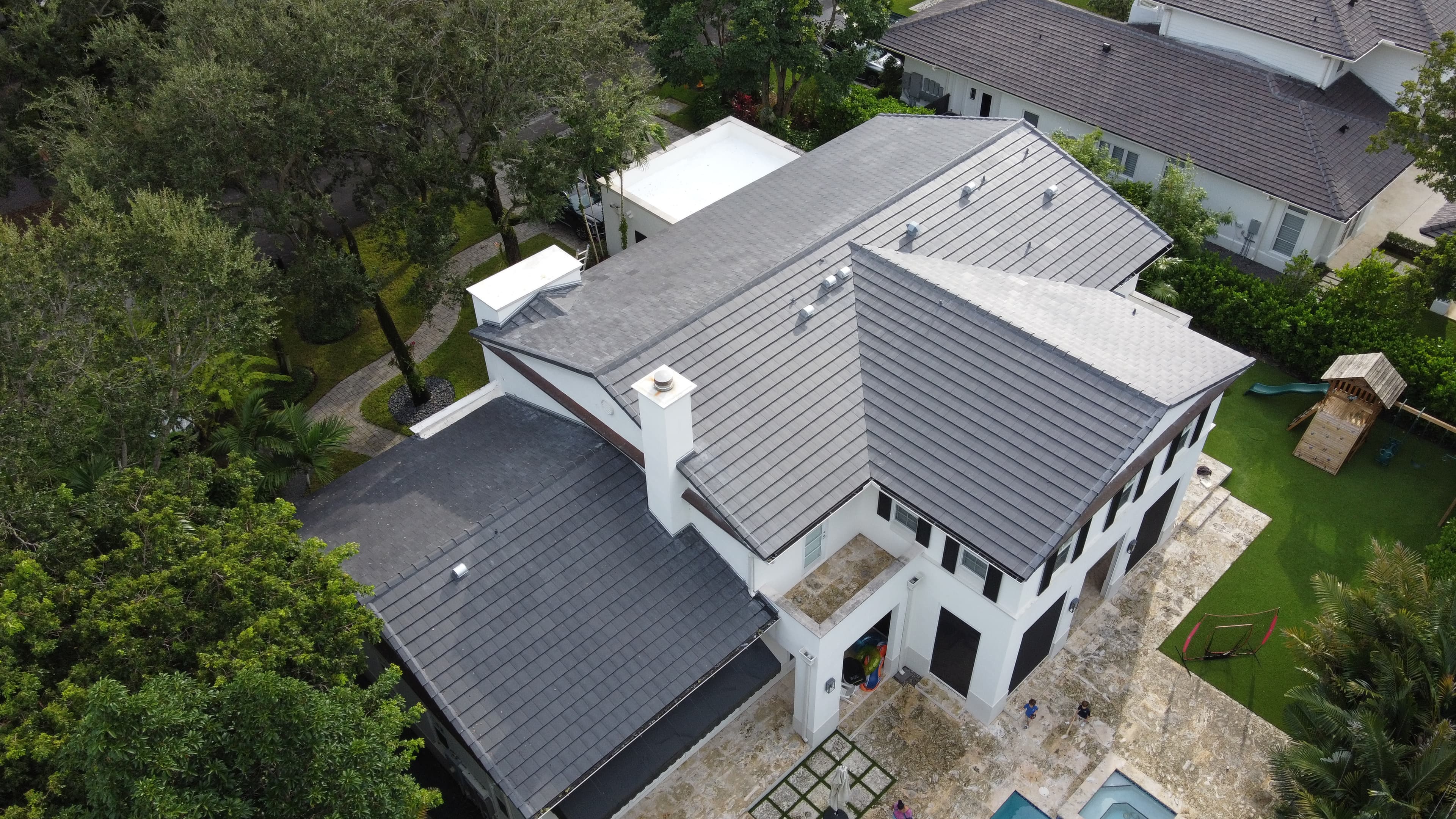
Memorial Day weekend is, for most South Florida homeowners, the unofficial start of summer — pool parties, family gatherings, the first really hot week of the year. It's also, less ceremonially, the w
Overview
Memorial Day weekend is, for most South Florida homeowners, the unofficial start of summer — pool parties, family gatherings, the first really hot week of the year. It's also, less ceremonially, the week before Atlantic hurricane season opens on June 1. Most of us have lived in this state long enough to know the second one is the real deadline.
This isn't a "go buy plywood" post. The plywood-and-water-jugs prep cycle is well documented and the local news will run it for you twice a week starting Tuesday. This is a calmer conversation: what should be true about your roof, today, Memorial Day weekend 2026, so that the rest of the season is something you don't have to think about?
The age question is the only question that matters
If your roof is past its expected service life, every other prep step is window dressing. Florida shingle roofs are most commonly rated for 20–25 years on the manufacturer warranty but Florida's UV, salt air, and storm cycle generally pulls real-world lifespan back to 15–18 years for asphalt shingle, 25–35 years for tile, and 30–50 years for properly installed metal.
Open your closing documents. Find the roof's age. If it's past year 12 on shingle, year 20 on tile, or year 25 on metal, the rest of this post is about you.
If it's not, the rest of this post is about what to do this weekend to make sure year 13/21/26 doesn't become a problem.
The Memorial Day weekend roof walk (without going on the roof)
Most of what you need to see is visible from the ground with a pair of binoculars or a phone camera with a good zoom. Look for:
- • Lifted, curled, or missing shingles along the ridge and eaves. The ridge sees the highest uplift force in a wind event; missing pieces there mean the system has already started to fail.
- • Cracked or sliding tiles, especially at the valleys and along the rake edges. A single sliding tile in May becomes a water-intrusion problem in a 70 mph rain band in August.
- • Dark streaks running down from the chimney, vents, or skylights. That's algae, but it's also a sign of moisture retention, which accelerates underlayment aging.
- • Standing water marks on the fascia or soffit. If the gutters backed up once, they'll back up again under storm-rate rainfall.
This walk takes 15 minutes. Do it before the first beer Friday afternoon.
Document everything, even if everything looks fine
The single most consequential roof-related action you can take Memorial Day weekend is to take dated, time-stamped photographs of your roof from each corner of your property — and store them somewhere you can find later. Cloud-backed photo apps that preserve metadata are ideal.
Why this matters: Florida statute 627.70152 governs property insurance claim timing, and case law on storm claims has tightened around what constitutes "pre-existing damage." Carriers that can't see your roof's pre-storm condition will, in a contested claim, default to assuming wear and tear. Dated photos are the cheapest insurance you'll ever buy.
The calculator-first option (the part most people don't know exists)
Here is the part the industry doesn't talk about: you don't need a 3-hour living-room sales pitch to find out what a new roof would cost. You don't need to take an afternoon off work. You don't need to sit at your kitchen table while someone "calls the manager" twice.
We built a calculator at roofweiler.com/price-my-roof that gives you a price in three minutes. Address, roof type, square footage, material preference — out the other end is a real cost range that, in our 2025 data, came within 4–7% of final invoice on the projects where the homeowner used the calculator first.
If you're past the age thresholds above, this is your Memorial Day weekend ask: take three minutes, get the number, and decide what to do with the information.
Price your roof. No salesman. No surprises.
That's not a slogan, it's a stance: we refuse the in-home sales siege model that dominates Florida roofing. The calculator is the proof. You shouldn't need a salesperson in your living room to know what a roof costs. So we built the tool that means you don't have to.
What about insurance, financing, the rest of it?
The calculator gives you cash price. If financing makes sense, we'll walk through options on a follow-up call — not on the calculator page, because financing isn't the product, the roof is. If insurance is in play (named-storm damage, hail), we handle the claim documentation as part of the inspection that's scheduled inside the calculator flow.
But none of that — none of it — requires you to sit through a 3-hour pitch. It starts with the number.
The five-step plan for Memorial Day weekend
- 1.
Open closing docs. Confirm roof age.
- 2.
15-minute ground-level walk. Note anything lifted, missing, or stained.
- 3.
Photograph all four corners of the roof from the ground. Cloud-backup with timestamps.
- 4.
Clear the gutters before the first afternoon rainstorm.
- 5.
If you're past the age thresholds: price your roof at roofweiler.com/price-my-roof. Three minutes. No salesman. No surprises.
Then go enjoy the long weekend. Hurricane season opens Monday — but if you spent twenty minutes on this checklist, the rest of the summer is just summer.
—
Roofweiler is a Florida-licensed roofing contractor (CCC1337426) serving Miami-Dade, Broward, and Palm Beach counties. We don't pitch in your living room. We don't sell tiered options designed to anchor a middle price. Our calculator is the same tool we use internally. Try it: roofweiler.com/price-my-roof. Or call us at (954) 787-3535.
🛠️ Price your roof. No salesman. No surprises.